
Ramzan Nigehban Card Registration Online 2026
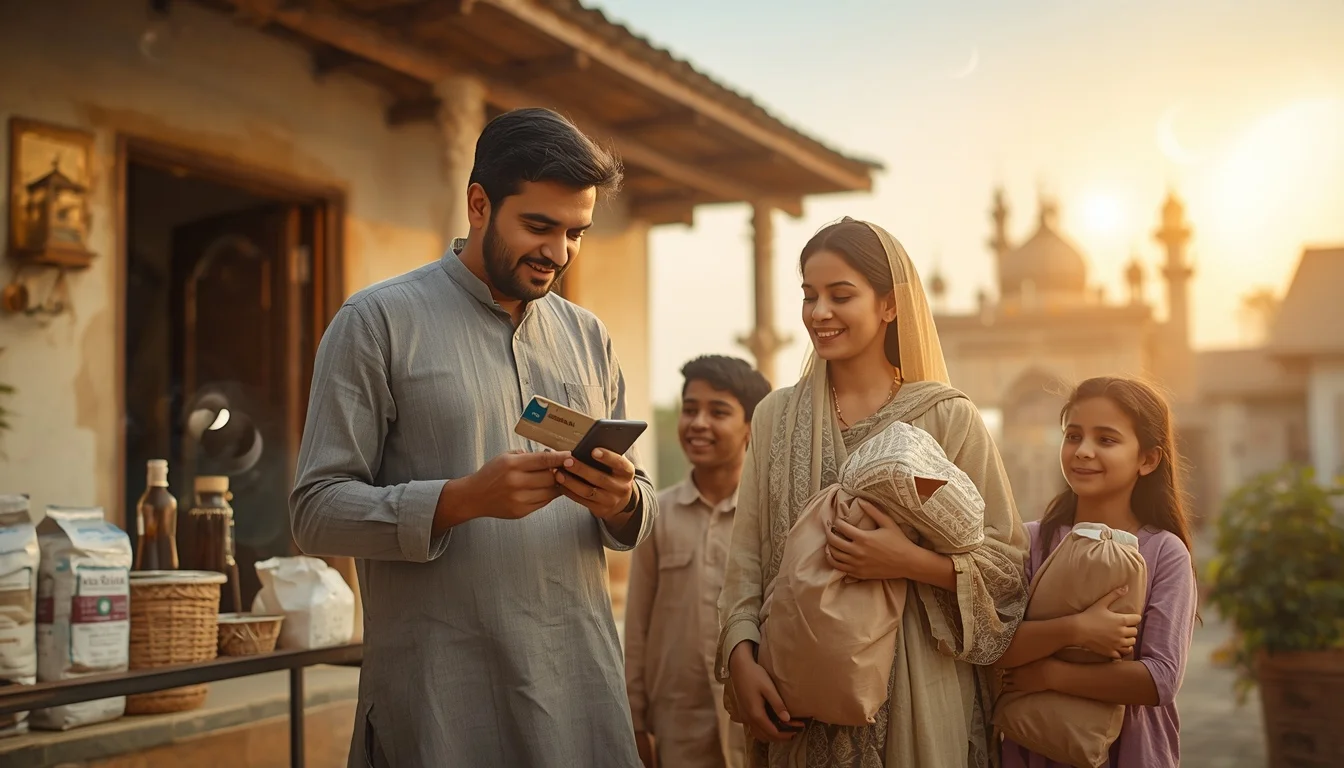
Most people searching for the Ramzan Nigehban Card 2026 start from the wrong end. They look for shortcuts instead of understanding how the registration system actually works. One thing is clear: your CNIC, your PSER data, and your mobile number are the three things that either open the door to Rs 10,000 cash support — or quietly close it.

The CM Maryam Nawaz Package was not built for people who panic-apply. It was built around verified, existing family records. This means the household information already sitting inside a government database is doing more work than any online apply button ever will. For low-income and deserving families across Punjab, this 2026 relief is about more than just grocery items. It is about dignity, transparency, and a digital shift that replaces the chaos of long lines with a streamlined system that respects your time.

What makes the Nigehban Package genuinely different this Ramadan is the scale of its financial support:

  • Rs 47 Billion allocated
  • 4.2 million eligible households targeted
  • PKR 10,000 one-time cash transfer delivered through ATM cards, branchless banking agents, and Mobile Wallets

The move from physical flour bags to a hybrid food security model shows that Prime Minister Shehbaz Sharif and CM Punjab understand that inflation does not wait for anyone.

If you are already registered in PSER — the Punjab Socio-Economic Registry — your status is likely closer to payment ready than you think. If not, a step-by-step guide, helpline 0800-02345, SMS 8070, and all key features are covered ahead to help you navigate the process without any confusion or hurdles.

What most people miss about this scheme is that it wasn’t designed as a seasonal gesture — it was built as a corrective response to years of disorganized distribution that left low-income households navigating long queues with zero dignity and even less transparency.

CM Punjab Maryam Nawaz announced a structurally different approach this time: instead of handing out rations through makeshift camps, the Nigehban Card functions as a digital solution that puts PKR 10,000 worth of financial support directly into the hands of deserving families — bypassing the chaos that historically plagued relief efforts across Pakistan

The PSER and CNIC verification backbone ensures eligibility criteria are applied with measurable transparency, so subsidized groceries and grocery items reach those genuinely under inflation pressure — rather than disappearing into poorly managed delivery pipelines.

From a practical standpoint, what makes this historic package functionally different is its streamlined registration process — accessible both through the 8070 portal and online application channels — where a household submits basic details and the case moves smoothly without delayed information holding things back.

Prime Minister Shehbaz Sharif’s federal endorsement added administrative weight, while:

  • Updated guidelines
  • Step-by-step guide materials
  • Useful links
  • Quick reference tools

…are all embedded across the portal to ensure even first-time applicants find navigation intuitive.

The helpline, status check features, and key features dashboard collectively serve eligible families who need immediate cash or grocery support during Ramadan month — making this less a government handout and more a purposefully engineered social delivery system.

Few social welfare efforts in Pakistan’s history have combined digitization with direct human empathy the way this flagship initiative does. The Ramzan Nigahban Relief Program was not just a budget exercise — it was built as a structured commitment to dignified survival during the holy month.

The sheer scale sets it apart from past aid cycles:

  • A reported allocation targeting one crore individuals in standing need
  • A Core Benefit Transfer delivering meaningful support per household
  • Funds reaching Beneficiaries through verified Cards — not informal channels
  • A doorstep account-based model built on Bank infrastructure for easier and fully auditable access

The Socio-Economic framing is what gives this program its structural credibility. Money moves through Nigahban-linked logistics, serving the largest undernourished segment before Eid pressure peaks — reducing the leakage that collapsed similar distribution programs in the past.

The 30 verified data individuals processed through Punjab’s PSER Online Registration system represent something quietly revolutionary — deserving families no longer chase offices. The program comes to them.

  • Nigehban Card details are accessible through a self-serve portal
  • Apply steps are streamlined for first-time users unfamiliar with formal welfare navigation
  • Registration works as both a filtering and an empowering mechanism
  • Transparency is embedded through NADRA Survey data cross-referencing at intake — not just promised

Inclusion in the program is based on weighted variables rather than income alone. Key factors include:

  • Residency: Must be a verified resident of Punjab with records present in existing government databases.
  • Demographics: Priority is given to widows, elderly citizens, and daily-wage laborers.
  • Household Composition: Large families and those with children registered on B-Forms are prioritized to validate family size.
  • Socioeconomic Factors: Evaluations include asset ownership, house structure, and the total number of household members.
  • Financial Need: Specifically targets households unable to independently manage food costs for Sehri and Iftari.

To ensure successful registration and verification, applicants must meet the following technical standards:

  • Valid CNIC: The head of the household (or their spouse) must possess an active, original CNIC.
  • Active Mobile Number: A functional mobile SIM is required to receive the One-Time Password (OTP) during the registration process.
  • Data Accuracy: Ensure that current address details and household records are up to date to avoid bureaucratic mismatches and automatic rejection.

The program utilizes a “pro-active” approach to reach eligible families, reducing the administrative burden on individuals.

  • Online Portal: Visit pser.punjab.gov.pk to check your status against PSER survey data using your CNIC.
  • Auto-Inclusion: Families previously registered in socioeconomic surveys may be automatically included without further action.
  • Door-to-Door Verification: Government teams conduct field visits to verify the living conditions and records of potential beneficiaries.
  • The 8070 System: Eligibility is processed through the 8070 system, which weighs all variables to determine final qualification.
  • Outdated Records: Information in the PSER or PITB databases that does not match current living situations.
  • Address Mismatches: Discrepancies between the provided address and official government records.
  • Inactive Contact Info: Failure to provide a mobile number capable of receiving the required OTP.

🌐 Begin at the Official Portal Visit the official web portal at pser.punjab.gov.pk to get started.

📋 Submit Your Basic Details Enter your CNIC for real-time cross-referencing against the existing NSER database — no separate form-filling, no redundant paperwork.

⏱️ Await Your Verified Status Within 30 hours in most tested cases, the system returns a verified or pending status directly on-screen.

📱 Confirm via SMS Send your ID number to 8123 via SMS to confirm your status.

🏢 Prefer It in Person? Visit E-Khidmat Markaz Walk into any E-Khidmat Markaz to physically check your application standing with a staff member.

📞 Stay Updated Through the Helpline Updates on payment readiness or collection availability are routed through the 080002345 helpline that handles general queries — no third-party apps, no unofficial redirects.

Most people approach welfare programs asking what they owe the system — the paperwork, the queues, the proof. The Ramzan Nigehban Card 2026 inverts that entirely. It asks what the struggling families of Pakistan are owed, and then delivers it with quiet, modern precision.

At its core, the package is a grant built around Dignity First — not charity handed across a counter, but a debit instrument placed in your hand. It gives beneficiaries the freedom to purchase what their household actually needs.

Walk into any registered grocery merchant or utility store, and the card works as purchasing power for essential items:

  • Flour (Atta)
  • Sugar
  • Ghee
  • Pulses

All available at subsidized rates that stretch a tight budget through the full arc of sehri and iftari.

How to Access Your Money

Beyond in-store use, the card enables direct Cash Withdrawal at designated points. The following channels are all live:

  • HBL Konnect
  • UBL Omni
  • Alpha Pay
  • 1LINK ATM

Whether you prefer a branchless banking agent or an ATM, the path to your money is yours to choose:

  • PKR 5,000 for standard households
  • PKR 20,000+ for larger households

Home Delivery — No Queues

What genuinely distinguishes this from older food distribution models is the elimination of lining up for trucks. The Targeted Distribution design routes a Rashan Bag directly to homes via Pakistan Post and local agents.

Each Rashan Bag contains:

  • Sugar
  • Ghee
  • Rice
  • Chickpeas
  • 1kg allocation of key staples

This reaches an estimated 2 million households, scaling toward 4 million+ users as payments roll out.

The program is administered through BISP-linked institute frameworks. This ensures the card reaches those whose eligibility has already been financially verified — making this not just support, but a structured opportunity for empowered households to reclaim peace of mind during Ramzan.

  • Funds are accessed through BOP and One Link ATMs — no queuing at government offices.
  • Ration bags are delivered to your doorstep or designated camp sites — those far from urban areas are not excluded.
  • Trained agents are stationed at distribution centers across the province to assist.
  • What you get
  • PKR 3,000 monthly credit redeemable at Sahulat Bazaar and Sasta Bazaar outlets.
  • These markets price essentials 25–30% below standard market rates.
  • Dastarkhwan dinners across tehsils feed up to 2,000 persons daily — no card needed at the meal.

Card must be activated by January 30, 2026.

February 15 is the final cutoff — late registrants lose their cycle for that month.

Once your card arrives, the withdrawal process is more straightforward than most recipients expect. The disbursement system runs through major banks and has been designed for a smooth experience — even for first-time users.

At any supported ATM, the on-screen prompts will guide you through each step. Insert your card, enter your PIN code, and then select Withdraw. The interface is simple enough that no prior banking experience is required.

The screen will walk you through everything — just follow the instructions as they appear.

For those unfamiliar with digital systems, a biometric thumb verification option is available at designated supported channel points. An agent will assist you at absolutely no fee — this service is entirely free of charge.

If you face a failed transaction or an unexpected deduction, report it immediately through the 136 helpline. Always keep your original receipt as confirmation of any transaction.

Only use nearby supported outlets and avoid any unofficial contacts. Your real-time activation and payment status is always available on the Ramazan Dashboard on the official portal — check there before assuming any issue.

Always ensure your 13-digit CNIC is entered without dashes or spaces when using the SMS or messaging app channels, as even minor formatting errors can stall verification.

Keep your updated Residential Status and Employment records accurate, since mismatched income or permanent resident details often trigger rejections.

Cross-check your eligibility beforehand via 8070 or the Complaint Portal to avoid last-minute surprises during distribution.

January 30, 2026

Application cutoff deadline — last date to apply for the Rashan program

Before Ramadan

Rashan bags to be delivered before the first Iftar — the January 30 cutoff was strategically aligned with Ramadan’s approach

Before Announcement

Province-level activation timelines had already begun processing before any public announcement was made

Late Applicants

Those who waited to apply found themselves racing against a system that was already mid-process

No Extensions

Deadlines in welfare programs like this rarely extend — once a window closes, it does not reopen

Missed Deadline

Families who miss the deadline miss the entire Rashan distribution round entirely

0800 02345 This is the single point of contact for all registration queries, processing delays, and documentation concerns. This is the only number you should rely on.

For the Ramzan Nigehban Card 2026, all genuine updates flow exclusively through official channels. Callers who reach out directly through the helpline resolve issues significantly faster than those chasing random links or app pages circulating across unverified platforms.

Fraudulent portals often mimic official branding to mislead applicants. Never engage with unsolicited messages promising fast approval or flagging a wrong submission — these are hallmarks of fraudulent schemes.

If it didn’t come from the official government portal or the published helpline, treat it as suspect. Legitimate initiatives under this program do not solicit information through third-party app links or unverified pages — they operate transparently through structured, publicly announced official mechanisms only.

The Ramzan Nigehban Card 2026 is not merely a welfare initiative — it is a statement of intent from a government choosing accountability over ambiguity.

Those who took the time to verify their eligibility through legitimate channels — dialing 0800-02345, visiting cm.punjab.gov.pk or pser.punjab.gov.pk, or simply walking into a Union Council Office or designated Facilitation Point — discovered something important: the system, when approached correctly, actually works.

Registering a new family under the Head of Household, cross-checking status updates through the administration portal, or confirming eligibility via Alfa’s email log are not bureaucratic burdens. They are deliberate safeguards against the misinformation that floods social media in the form of fake numbers, shady app pages, and false promises of fast-track approval.

As January gave way to February 2026, with ATM card activation centers fully operational by January 30th and distributions rolling out in late February, the program’s scale became undeniable — millions of cards, no hidden charges, and a relief package that included Flour, Sugar, Ghee, Oil, Rice, Chickpeas, Dal, Besan, and Onions, with scaled allocations of up to 200 kg designed around iftar planning for vulnerable households.

The lesson here is straightforward: official routes protect. Shortcuts corrupt.

When people choose verification over assumption and patience over urgency, relief reaches those who need it most — and that, ultimately, is the measure of any welfare system worth trusting.

Similar Posts

Leave a Reply

Your email address will not be published. Required fields are marked *